 Optics Fleet
Build the day
Create ordered stops, assign a driver, optimize the route, and let recurring work generate itself.
Plan the day, watch every vehicle move, guide drivers through each stop, and receive GPS-stamped proof at the door—all in one shared timeline.
Create ordered stops, optimize the route, assign a driver, and keep the plan editable when the day changes.
Every person sees only what they need, while every action lands on the same job record.
Create ordered stops, assign a driver, optimize the route, and let recurring work generate itself.
See position, ignition, driver, speed, and stop progress. Exceptions rise before they become calls.
The driver follows a deliberately narrow phone flow: next stop, navigate, arrive, capture, done.
Photo, recipient, note, timestamp, and GPS become one proof record—even without signal.
Optics Fleet gates completion until the required proof is present, then ties it to the exact stop, person, time, and place.
The console stays dense for operations. The phone stays narrow for people in motion. The customer gets a link, not an account.
Build routes, watch live progress, reorder mid-day, message drivers, and resolve the two things that need attention—not the ten that do not.
No map canvas to manage. Drivers see the next stop, the route list, messages, shift controls, and exactly the proof required to complete the job.
Managers can check jobs, vehicle state, and safety signals while moving without accidentally changing the operating plan.
The recipient sees an ETA window and delivery milestones, then receives the confirmation when the proof record lands.
One design system, one status vocabulary, and one audit trail across every surface.
Position, ignition, speed, driver, and quiet-device flags — with trip replay across your plan’s history window.
Ordered stops, driver assignment, route optimization, skipped-stop reasons, and recurring jobs.
Photo, recipient, notes, GPS and time — gated before a stop can complete.
A private tracking page and milestone emails — no login, fewer “where is it?” calls.
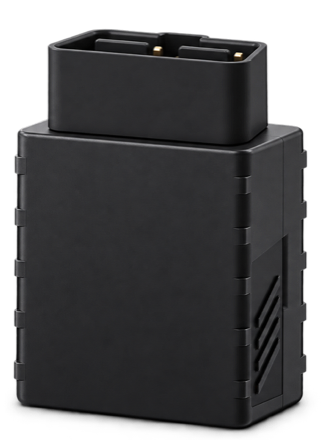
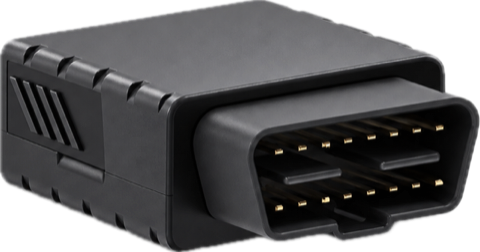
Pair a Beacon V1 by IMEI for vehicle truth independent of any phone — or let the driver’s phone report.
Depot, site, and speed-limit zones trigger alerts and automations in the cloud — or enforce rules on the device.
Harsh braking, speeding, cornering, and camera events ranked so managers start where risk is highest.
A GPS time clock with punches tied to place, pay-rate history, driver documents, invitations, and testing programs.
Start with the driver’s phone where that is enough. Add a vehicle device where always-on position, ignition, and device-level controls matter.
The driver app reports location while it guides the route and captures proof.
Plug the LTE-M / Cat-1 unit into OBD-II for ignition, movement, device health, and hardware zones.
Most products begin with either people on phones, routes and orders, or vehicle hardware. Optics Fleet keeps all three on the same operational record.
| Capability | Optics Fleet | Phone-only field tracking | Delivery-only routing | Enterprise telematics |
|---|---|---|---|---|
| Live vehicle + driver view | Unified | Driver only | Route context | Vehicle deep |
| Door-level proof of delivery | Gated + GPS | Forms / photos | Usually | Varies |
| Recipient live tracking link | Built in | Varies | Usually | — |
| Phone + dedicated hardware choice | Per operation | Phone only | Phone first | Hardware first |
| Safety, zones, and device health | Connected | Basic | Limited | Deep |
| GPS time + workforce records | Built in | Often | Limited | Varies |
| Public pricing and exit terms | Published | Often | Mixed | Usually quote-led |
Category comparison is directional — individual vendors and plans differ. The Optics Fleet column describes the shipped product.
Phone-based delivery, hardware-backed tracking, or both on the same account. Annual billing is lower on every published rate.
$17.99 / seat / month billed annually
One driver, one vehicle, 400 stops a month — a ceiling, not a starting point.
$26.99 / seat / month billed annually
From 2 driver seats. Office and admin logins are free and unlimited.
$26.99 / device / month billed annually
Always-on vehicle truth — with a delivery plan, or on its own.
Quoted against your fleet and term
Any shape the self-serve plans cannot make — cadence, history, and support to contract.
Rent the hardware and there is no device balance at all. The exact arithmetic is on the cancellation policy and the rate card.
USD per unit per month. Solo is one seat by design; Deliver starts at two driver seats. Parcel tracking is quoted per agreement.
Enough clarity to decide whether a demo is worth your time.
Ask a different questionNo. On Solo and Deliver the driver’s phone is the tracker. Add the vehicle-tracking line where you need position independent of the phone, ignition data, device health, or hardware geofences — it works with a delivery plan or on its own.
Photos, recipient, and notes can be captured offline. The proof stays queued on the device and uploads when connectivity returns, without creating duplicate records.
No. Each stop can have a private public link showing the delivery’s progress and ETA window. Milestone emails can keep the recipient updated on the way.
Deliver and Enterprise include REST API access and outbound webhooks — 100,000 calls and 100,000 deliveries a month on Deliver. Automations can also react to vehicle and delivery events inside the product.
No. It records operational time and vehicle activity, but it does not create duty-status logs or provide FMCSA hours-of-service compliance workflows.
Start with the phone, add hardware where you need it, and keep dispatch, drivers, recipients, and proof on the same timeline.
 BEACON V1
 Vehicle 14 · online